Turning complex ecological challenges into clear action

We help clients understand, manage and monitor bat activity throughout every stage of development. From vegetation clearance and impact assessment, to consent requirements and long-term monitoring, we provide clear, evidence-based advice tailored to each site and situation. We focus on delivering practical solutions that protect bat populations, whilst helping projects move forward with confidence.

20 years
experience
Specialist
expertise

Clear
communication
Evidence
based

What sets us apart
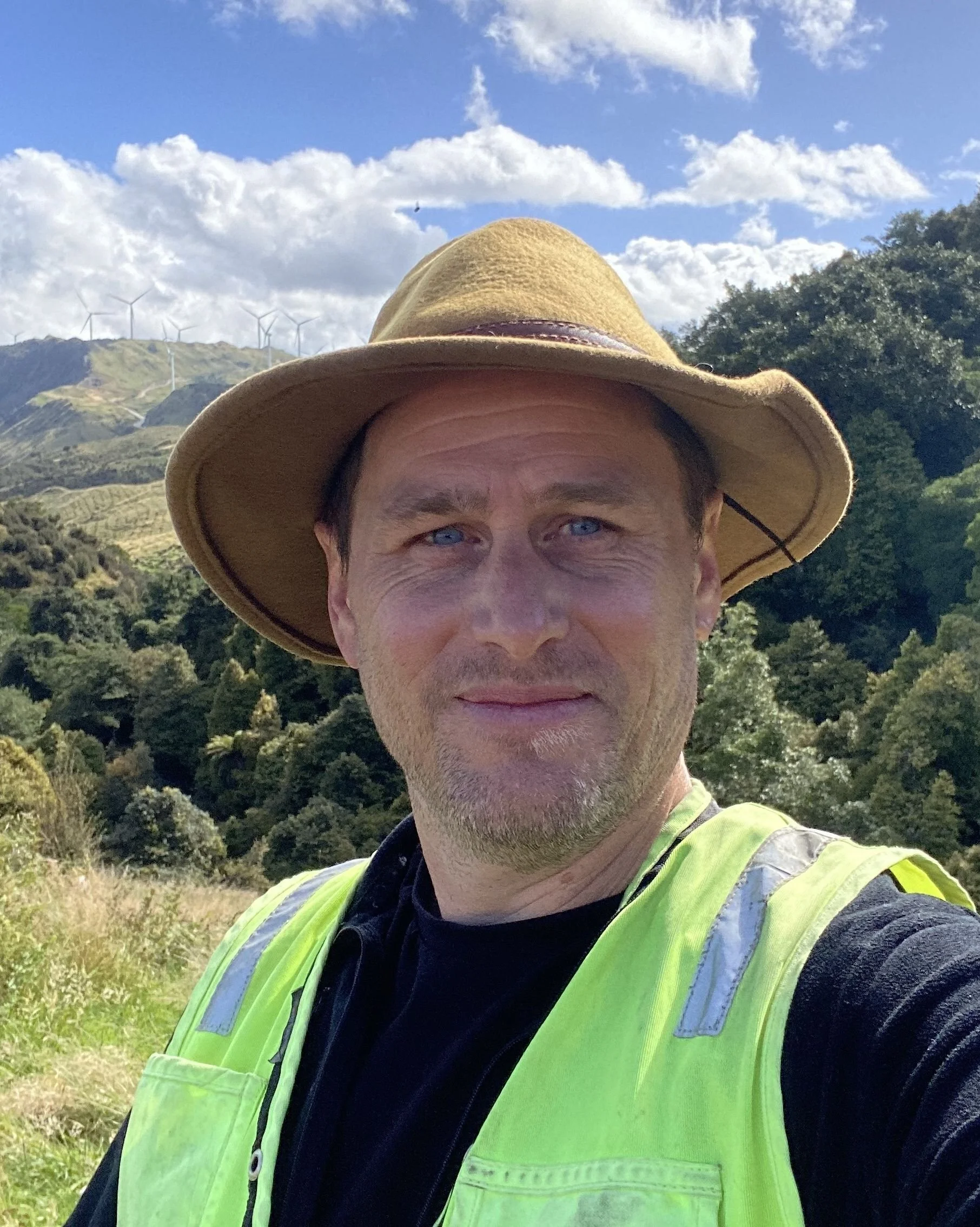
Mark Roper is a senior ecologist with more than 20 years of experience and specialist expertise in bat ecology, helping organisations make informed decisions in complex environmental contexts. Working across diverse project types, he identifies ecological risks early, reduces uncertainty, and develops practical pathways forward. His approach is evidence-based, aligned with recognised bat roost protocols, and focused on delivering outcomes that are scientifically robust, proportionate, and workable in practice. Whether you need specialist advice, project support, or guidance on next steps, we bring practical ecological expertise to help turn complexity into action.
Our consultancy follows established bat roosting protocols to ensure consistent, compliant, and evidence-based practice.
-
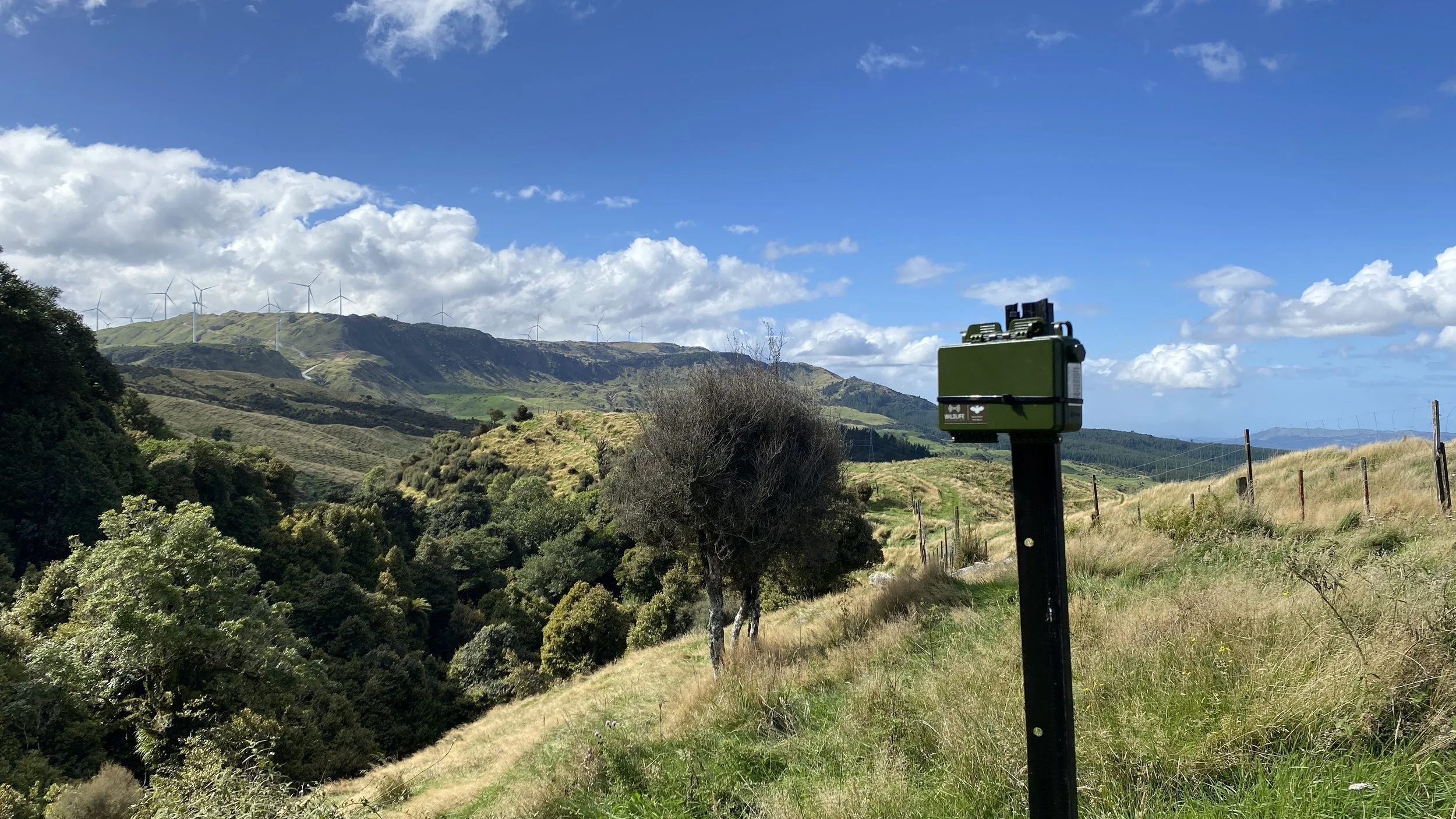
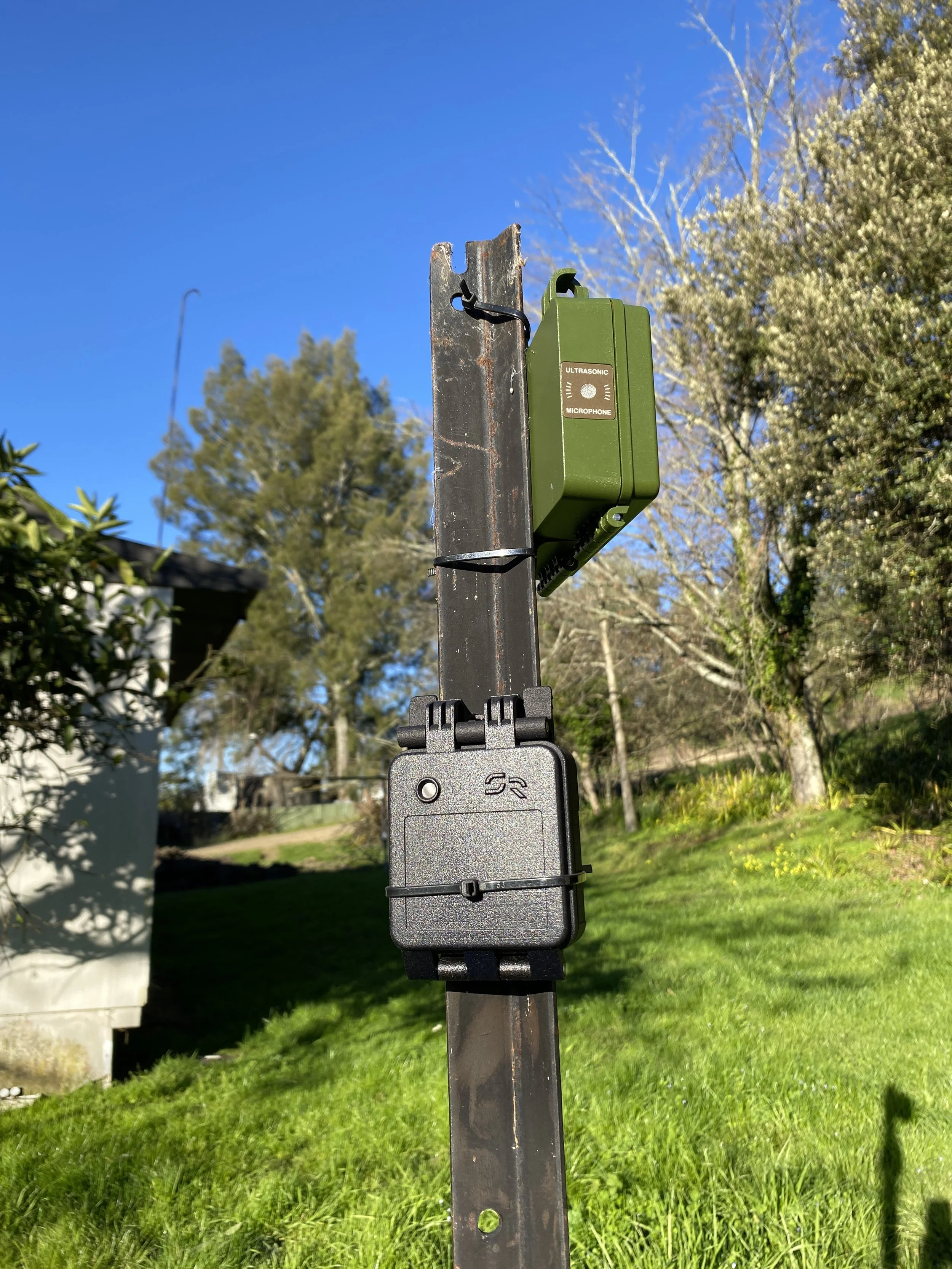
Acoustic surveys are at the core of what we do. Using specialised bat detectors, we monitor bat activity across sites to determine whether bats are present, how they are using the landscape, and where activity is concentrated. These surveys provide the robust data needed to inform project planning, impact assessments, monitoring programmes, and management decisions.
-
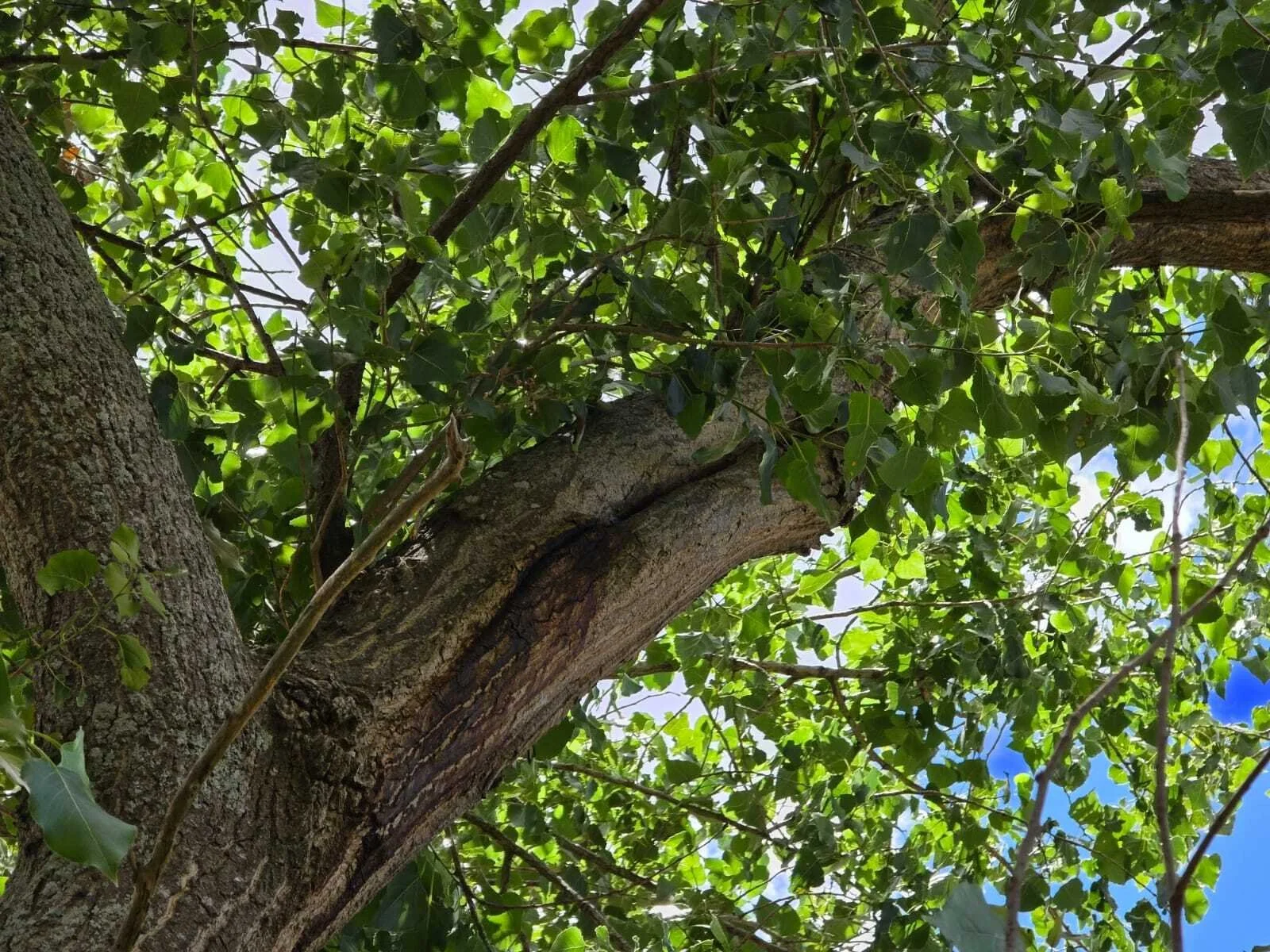
If your project involves tree removal, we assess trees for Potential Roost Features (PRFs) that could be used by bats. This helps identify where bats may be present and highlights any trees that require further investigation before works proceed.
-
Where Potential Roost Features are identified, we help clients understand which trees may be of greatest importance to bats. By combining survey results with ecological expertise, we provide the information needed to make informed decisions about tree retention, project design, and risk management.
-
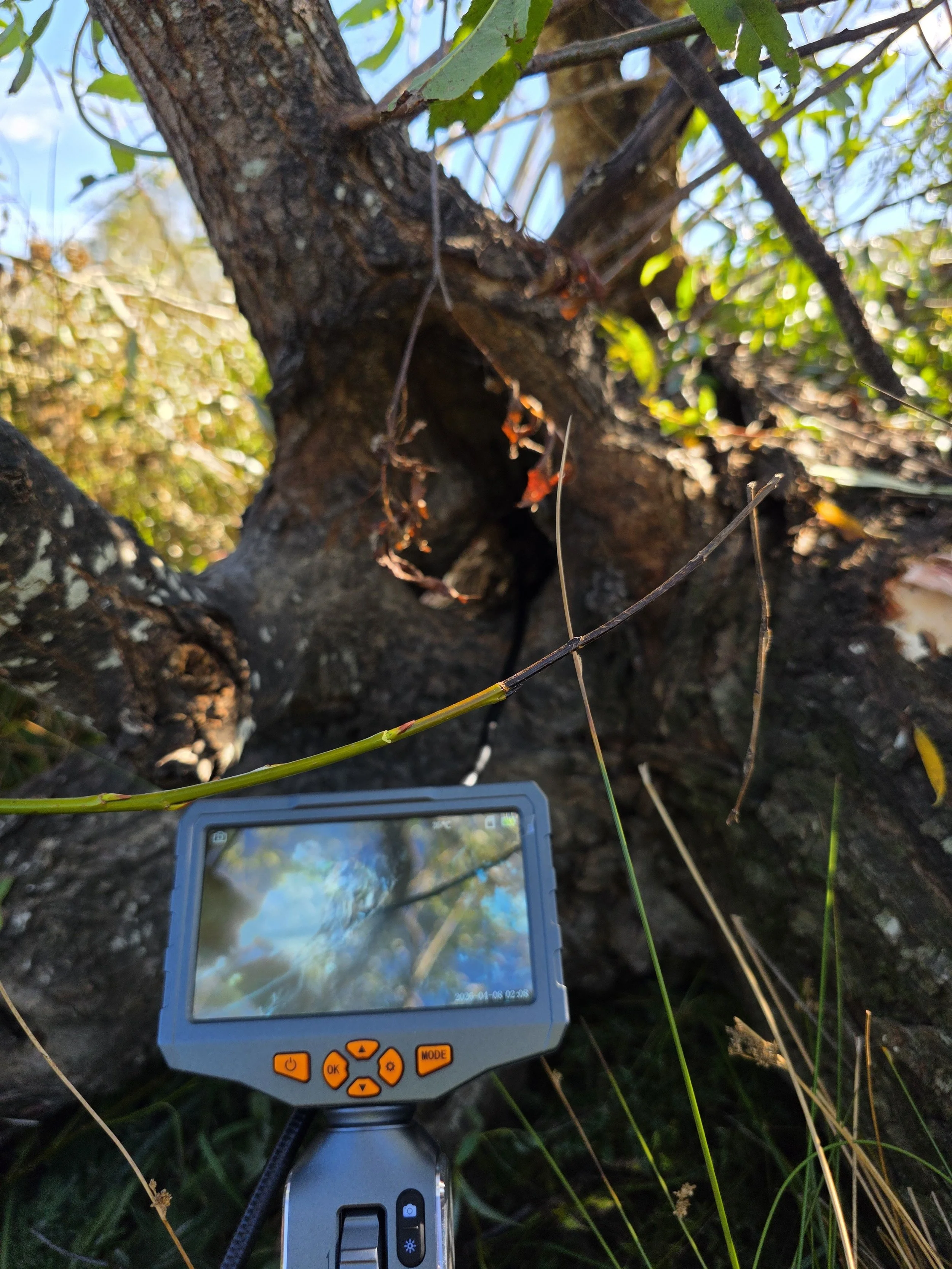
Before trees containing Potential Roost Features are removed, we undertake targeted inspections to determine whether bats are present. Depending on site conditions and project requirements, this may include acoustic monitoring, thermal imaging, endoscope inspections, and visual assessments to ensure works can proceed responsibly and in accordance with consent requirements.
-
Following tree removal, we undertake final inspections of felled trees to confirm that bats are not present within identified roost features. This may involve visual inspections and handheld bat detection surveys, providing an additional layer of confidence and compliance during project delivery.
-
We develop Bat Management Plans that outline the survey, monitoring, mitigation and management actions required for a project. These plans provide a clear framework for managing potential impacts on bats and ensuring regulatory requirements are met throughout project delivery.
-
We design and implement monitoring programmes that assess how activities may affect bat populations and habitat use over time. By combining robust survey design with acoustic monitoring, we generate the data needed to evaluate project effects, measure outcomes, and support evidence-based decision making.
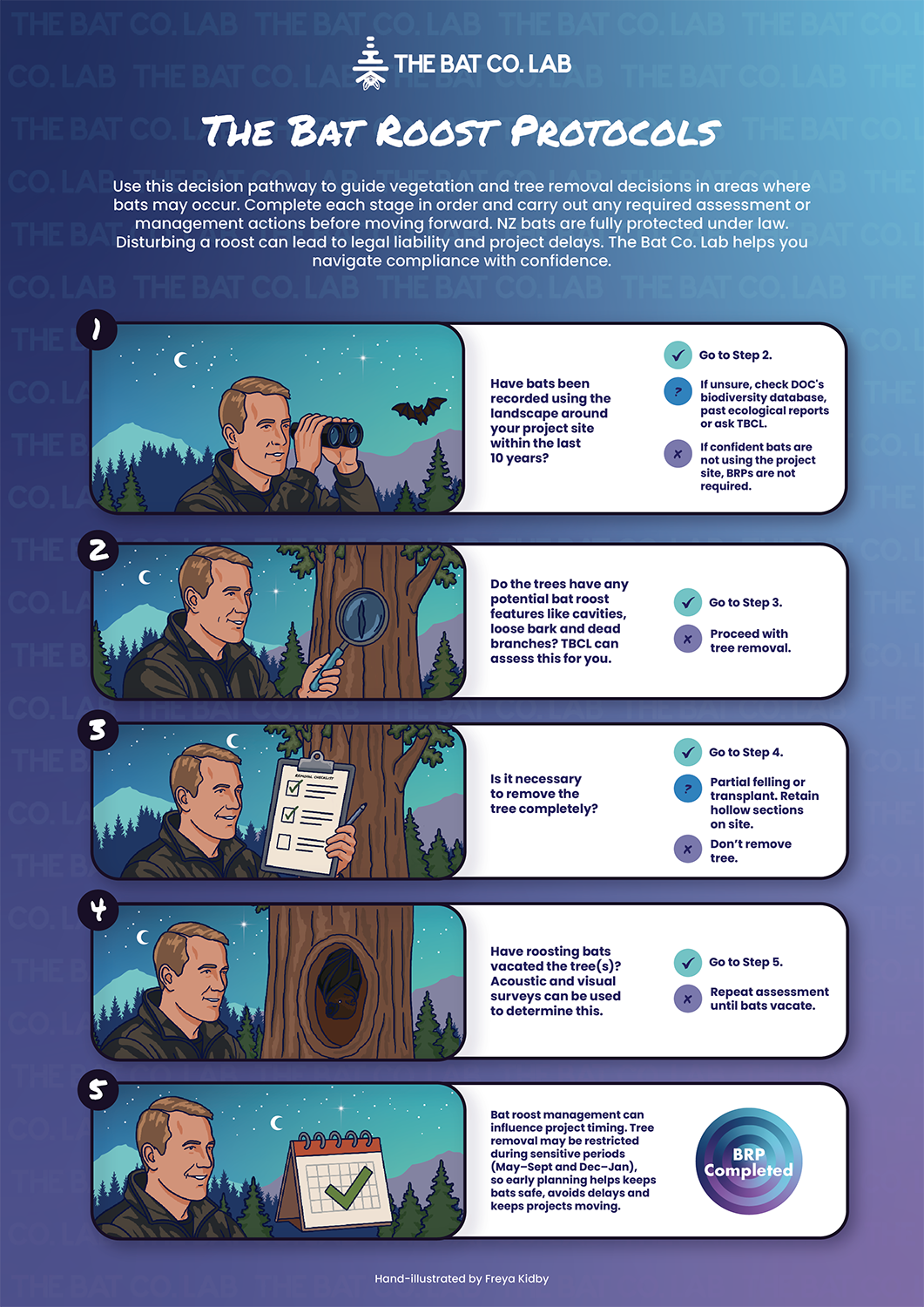
(Click to download)
-
![]()
Sarah Wills | Department of Conservation
“Mark spent a full season with our Department of Conservation team in Whirinaki Forest, near Murupara, North Island, New Zealand. He placed harp traps where they were needed at roost entrances - ran disciplined roost watches, banded under permit, and used telemetry to pinpoint day roosts efficiently. A competent, hard-working field worker, he kept clear notes and maps and was a dependable team-mate through long nights in a tight-knit crew. I fully endorse Mark for bat trapping and tracking projects.”
-
![]()
Dale Eastham | Fulton Hogan Ltd.
“Mark helped out Fulton Hogan to provide us with monitoring and methodology relating to bats in proximity to one of our proposed quarrying sites on the East Coast of New Zealand. What I especially valued was that his support was pragmatic and well-considered; all the information we needed and nothing we didn’t – on-time and on-budget. He knows his topic because he’s ‘been there and done it’, and can back it up. Being able to communicate to all the people he interacted with on-site and in formal circumstances was appreciated and valued – I look forward to an opportunity to work with him again in the future.”
-
![]()
Niclas Fritzén | Valsörarna Biological Station | Finland
“Mark has routinely joined our field seasons at the Valsörarna Biological Station, working on both the islands and the Vaasa mainland. He participated in planning and running harp trapping and mist netting in bat flyways and at bat roosts, he participated in banding under permit, and then tracked tagged bats—often alone—through remote forest and coastal terrain on long nights, carefully mapping foraging movements in real time and confirming day-roost locations by first light. He has been present for three field seasons in Finland, both during the breeding season and the autumn migration. I warmly recommend him for trapping and radio-tracking assignments.”
-
![]()
Dan Fake | Environmental Advisor | Pan Pac Forest Products Ltd
“Mark carried out bat monitoring and freshwater projects for us at Pan Pac. We were impressed by his depth of knowledge, clear communication, and pragmatic, safety-conscious fieldwork. He understands how busy foresters are and tailors a low-cost, easy-to-implement approach that fits our timelines and scales across sites. His advice bridges ecological science and operational realities, delivering on-time, actionable reports and practical mitigation. This has supported better decision-making and contributed to improved biodiversity outcomes. We’re very happy to recommend him.”
-
![]()
Dr Morgan Hughes - Urban Bat Project
“I recruited Mark in 2025 to be part of a small bat research team in a remote field site in central Croatia. We had our work cut out for us as we had to deliver a complex and time-sensitive field experiment whilst juggling teaching, field training, and ongoing monitoring at multiple bat roosting sites and commuting routes. It is a rare and surprising experience when you find someone who strikes the perfect balance of teamwork, initiative, creativity, and energy, and Mark brought all of this to the project from day one. Looking back, I don't know how I would have pulled off this project without him. I will take every opportunity to collaborate with him in the future.”
-
![Operation Wallacea Logo]()
Evie Courtenay | Operation Wallacea
“It was a pleasure to have Mark join us as a bat scientist as a part of our long term biodiversity monitoring project at Operation Wallacea's Croatia site in Krka National Park. The role was multifaceted and he was able to apply himself with enthusiasm and skill to each responsibility and activity he delivered. Through hearing feedback from others, and my own observations, Mark was always proactive and happy to help others which goes far in a fieldwork setting. On learning more about Mark's work in New Zealand his passion was evident and following along with him since it's been great to see the program develop. I can confidently say Mark would be a brilliant person to elevate any team.”
-
![Ellen Atkins | Hawke's Bay Regional Council]()
Ellen Atkins | Hawke's Bay Regional Council
“Mark provided end-to-end bat management support for our flood resilience project, including a 21-night acoustic bat survey, bat roost potential assessments, pre-felling surveys, and on-site inspections during tree removal. His ability to combine acoustic monitoring with practical field-based assessments and real-time decision making helped works proceed efficiently while maintaining ecological compliance and avoiding unnecessary project delays. Communication was clear and professional throughout, both with our team and other contractors on site, and reporting was delivered promptly to a high standard. Mark’s pragmatic, solutions-focused approach and understanding of operational pressures made the process straightforward from initial cost estimate through to project delivery.”
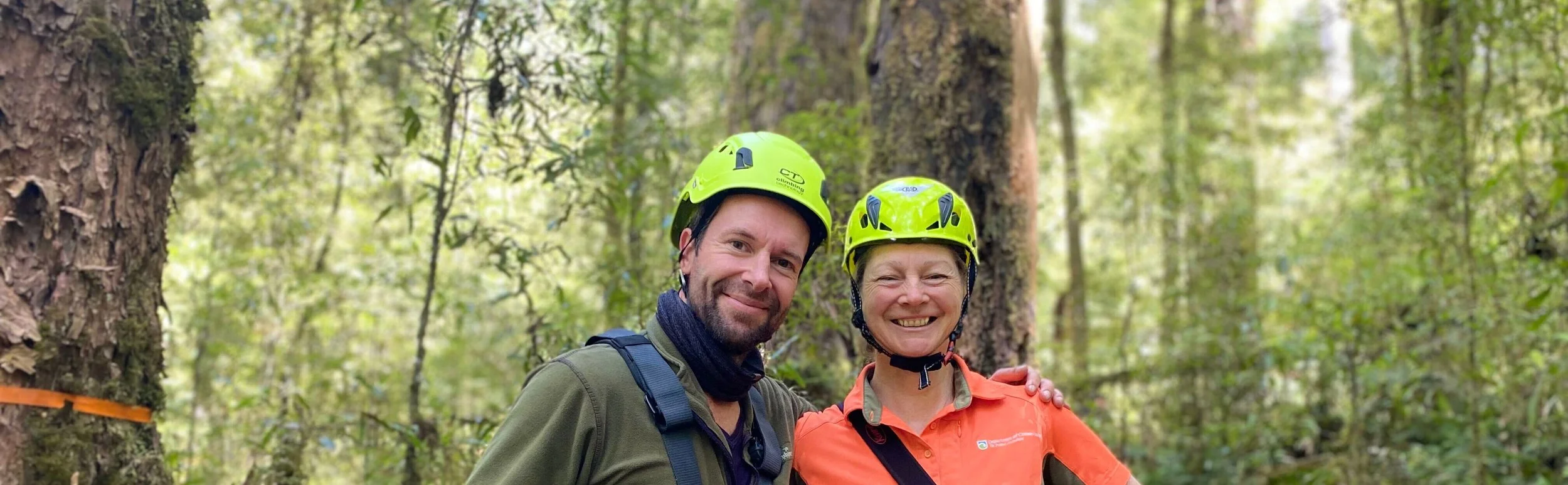





Case study 1: Keeping pekapeka safe on the Wairoa river
-
Flood protection works along the Wairoa River required the removal of a stand of mature exotic trees. Trees that, as it turned out, long-tailed bats (Chalinolobus tuberculatus) were actively using. New Zealand’s only surviving land mammals and classified as Threatened - Nationally Critical, long-tailed bats (pekapeka) face serious risk when roost trees are felled without proper survey and management. HBRC needed to know whether bats were present, which trees posed the greatest risk, and how to proceed with felling without causing harm.
-
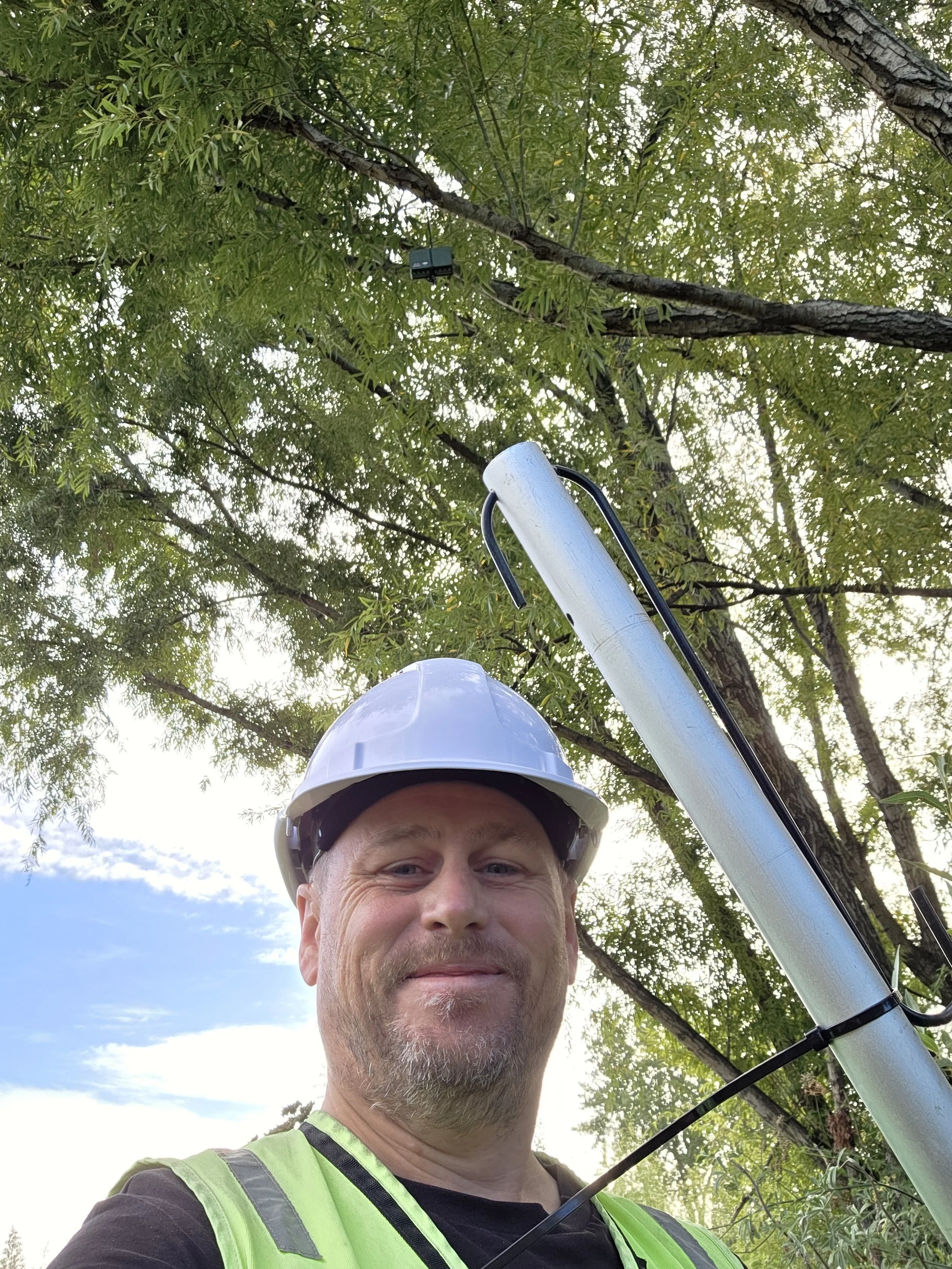
We implemented all five steps of the DOC Bat Roost Protocols across this project. First, we deployed nine acoustic bat detectors along the Wairoa River for 23 survey nights, recording over 571 long-tailed bat echolocation calls across eight of nine survey sites, confirming bats were actively using the area. We then conducted a Bat Roost Potential Assessment (BRPA), walking the entire works footprint to visually assess every tree proposed for removal, identifying those with potential roost features (PRFs) such as cavities, cracks, and loose bark. Immediately prior to felling, we deployed detectors again over two consecutive valid survey nights, used a thermal camera for roost watches, and supervised the felling and post-felling inspection of every tree on site. All acoustic data was contributed to the DOC National Bat Database.
-
All trees were successfully felled and no bats were harmed. Our pre-felling acoustic monitoring allowed works to proceed with confidence, and our on-site supervision ensured that every felled tree was inspected before removal from site. The project added 571 new long-tailed bat call records to the national database, strengthening knowledge of bat distribution in the upper North Island.
-
This project is a clear demonstration that infrastructure works and bat conservation are not mutually exclusive. With the right planning, expert survey work, and real-time on-site management, flood protection can proceed without compromising one of New Zealand’s rarest and most vulnerable species.
Case study 2: When one tree said wait - Porangahau

-
Eleven exotic trees along the Pōrangahau River needed to be removed as part of flood protection works. A previous Step 1 acoustic survey had already confirmed that long-tailed bats were active in the project area, meaning the question was no longer “are bats present?”, but “which trees might they be roosting in, and can we fell them safely?” The client needed the remaining protocol steps completed quickly, within a tight felling window.
-
We began with a Bat Roost Potential Assessment (BRPA), assessing all 11 trees proposed for felling and identifying those with potential roost features; cavities, cracks, hollows, or loose bark that a pekapeka might use as a day roost. Trees were scored High, Moderate, or Low based on their roosting potential. Following the BRPA, we deployed acoustic detectors for pre-felling monitoring across two consecutive valid survey nights. We were on site for all felling days, using a handheld bat detector and endoscope camera to inspect each tree once felled before it was removed from site.
-
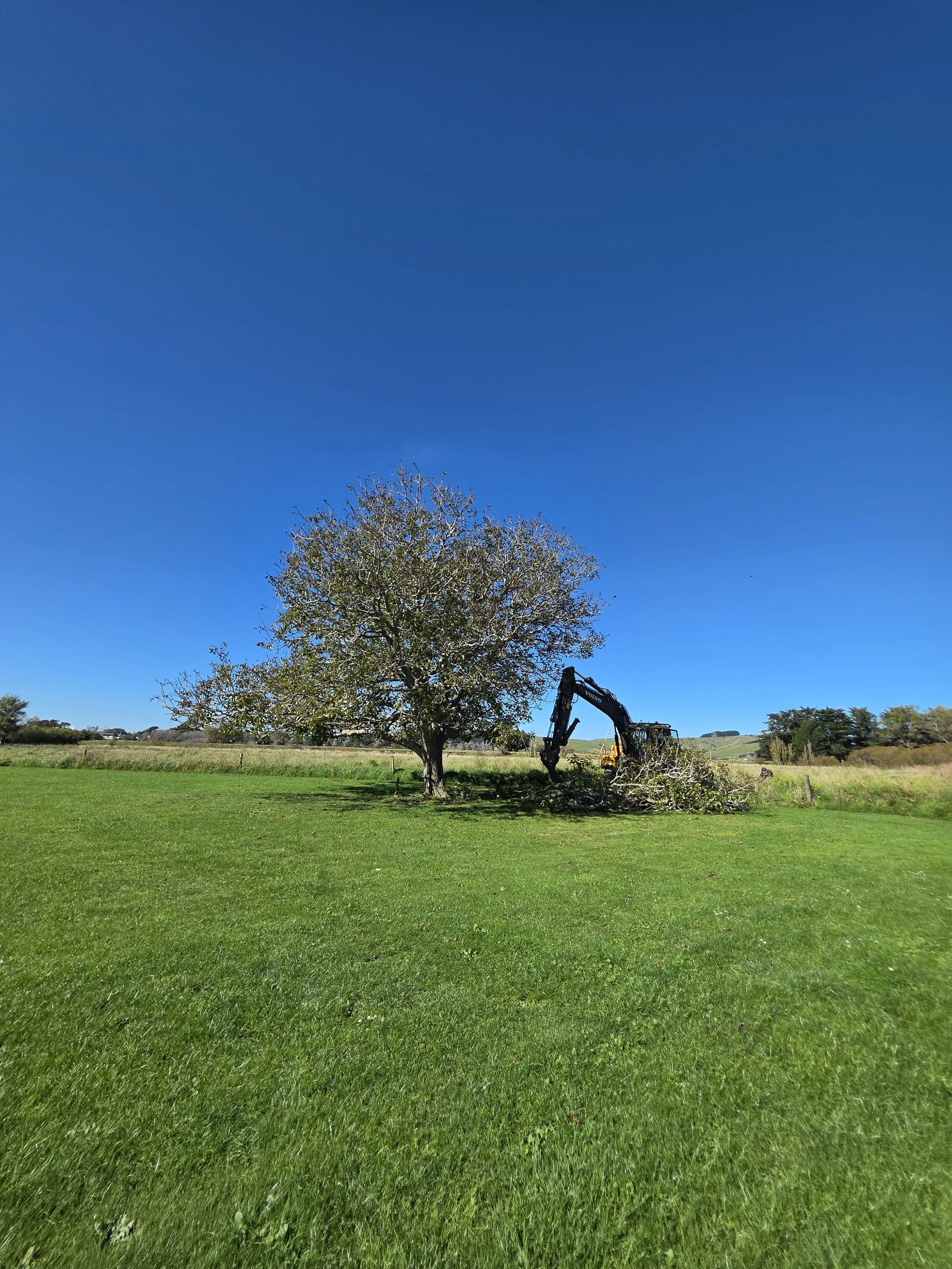
One tree had to wait. Bat activity was detected adjacent to a high-PRF tree on the first monitoring night, meaning felling of that tree was delayed until two consecutive bat-free nights were achieved. Once those conditions were met, it was felled safely. All 11 trees were eventually removed and no bats were harmed. The project also confirmed long-tailed bat activity at a second location within the project area, new information added to the national database.
-
This project illustrates exactly why the Bat Roost Protocols exist: not to stop work from happening, but to ensure that when bats are present, felling is timed to avoid harm. A one-day delay on a single tree is a small price for ensuring a Nationally Critical species isn’t killed in the process.
Case study 3: Bats and solar - Masterton Agrivoltaic Facility

-
A 143-hectare agrivoltaic (solar farm) development near Masterton required a comprehensive bat management programme as a condition of resource consent. Long-tailed bats were known to use the wider area, and the site contained dozens of mature exotic trees, poplars, pines, willows, macrocarpa, many with features that could provide bat roost sites. The client needed a complete ecological framework covering pre-construction survey, vegetation clearance management, construction controls, and five-plus years of operational monitoring.
-
This was our most comprehensive bat engagement to date. We began with a full-season pre-works acoustic bat survey, deploying 23 detectors across 23 sites (including four control sites) for three survey rounds covering December 2025, January–February 2026, and March–April 2026. This generated over 1,400 detector-nights of data, documenting long-tailed bat activity in detail across different seasons and habitat types.
Concurrently, we carried out a detailed Bat Roost Potential Assessment across 13 discrete vegetation areas, scoring every tree proposed for clearance. We then authored a full Bat Management Plan and a Bat Monitoring Plan establishing a five-year control-impact acoustic monitoring programme. Prior to vegetation clearance we implemented Steps 4 and 5, including pre-felling acoustic monitoring and on-site supervision, with endoscope and thermal camera inspections of every removed tree.
-
All vegetation clearance was completed in compliance with the Bat Roost Protocols and the Bat Management Plan. No bats were harmed. Baseline bat activity data from three survey rounds now provides a robust foundation against which future operational impacts can be measured. The monitoring programme will continue annually for five years and feed into the DOC National Bat Database.
-
New Zealand’s renewable energy sector is growing fast, and bat management is increasingly a condition of consent for large-scale infrastructure projects. This engagement demonstrates TBCL’s capacity to deliver end-to-end bat ecology services for complex, multi-year projects, from initial survey design through to long-term monitoring frameworks built to survive regulatory scrutiny.
We’re building something bigger…
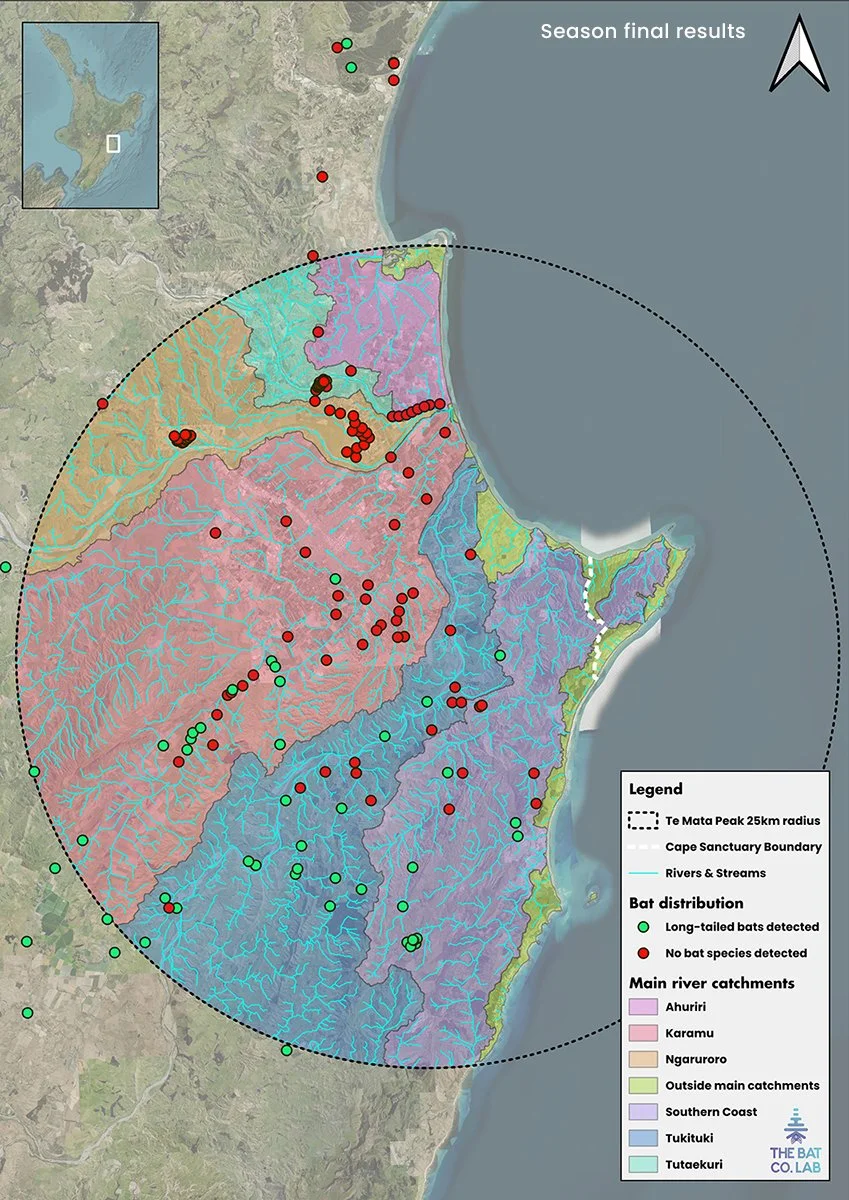
We believe protecting bats starts with understanding them. The National Bat Survey (see map), along with our independent projects, are our commitment to building a better picture of bat populations across New Zealand. We do this by creating opportunities for people to contribute, learn and take part in meaningful ecological monitoring. By combining community participation with scientific expertise, we hope to generate knowledge that supports conservation, informs decision making, and creates lasting impact for bats and the landscapes they depend on.
AS SEEN IN